
The Isle of Man Platinum Noble, first struck in November 1983, is widely credited as the world's first platinum bullion coin — predating the Canadian Platinum Maple Leaf by five years and the American Platinum Eagle by fourteen. Issued by the Isle of Man government and produced by England's Pobjoy Mint, the Noble ran for six years before production ended in 1989, leaving behind a genuinely historic, short-lived series that most modern buyers have never heard of.
This guide covers what made the Noble first, its design and specs, why it stopped after 1989, and how it compares to the platinum coins that came after it. If you're ready to buy, our Isle of Man Platinum Noble 1 oz Coin is priced off live spot.
What Made the Noble the First of Its Kind
Platinum coins existed before 1983 — Russia struck platinum rubles in the early 1800s, and various commemorative platinum issues appeared over the following century and a half. But those were commemoratives, not products designed for ordinary investors to buy and hold as bullion. The Isle of Man Noble changed that: struck in .9995 fine platinum, the same purity standard used across the platinum market today and consistent with London Platinum and Palladium Market Good Delivery standards, it was the first coin specifically created and marketed as an investment-grade platinum bullion product.
Design: A Young Queen and a Viking Ship
The Noble's obverse features a portrait of a young Queen Elizabeth II, notably different from the more contemporary portraits used on British and Canadian coins minted around the same time. The reverse depicts a Viking longship in full sail, a nod to the Isle of Man's Norse heritage, framed by an elaborate Viking knot border with the island's triskelion emblem at the top. The coin carries legal tender status, though — similar to the South African Krugerrand — its value is tied entirely to its platinum content rather than a separate face value.
Specs
| Spec | Detail |
|---|---|
| First minted | November 1983 |
| Fineness | .9995 platinum |
| Weight | 1 troy oz (31.1 g) |
| Diameter | 32.7 mm |
| Edge | Reeded |
| Minted by | Pobjoy Mint (England), under the Isle of Man government |
| Production years | 1983–1989 (main bullion run) |
Why Production Stopped in 1989
The Noble's bullion run lasted only six years, ending in 1989, after which regular annual production stopped. That short window is part of what makes original Nobles genuinely scarce today compared to coins with decades of continuous production. Later, sporadic and commemorative issues appeared under different minting arrangements, but the classic 1983–1989 bullion series is what most collectors and investors mean when they refer to the Platinum Noble.
How It Compares to Later Platinum Coins
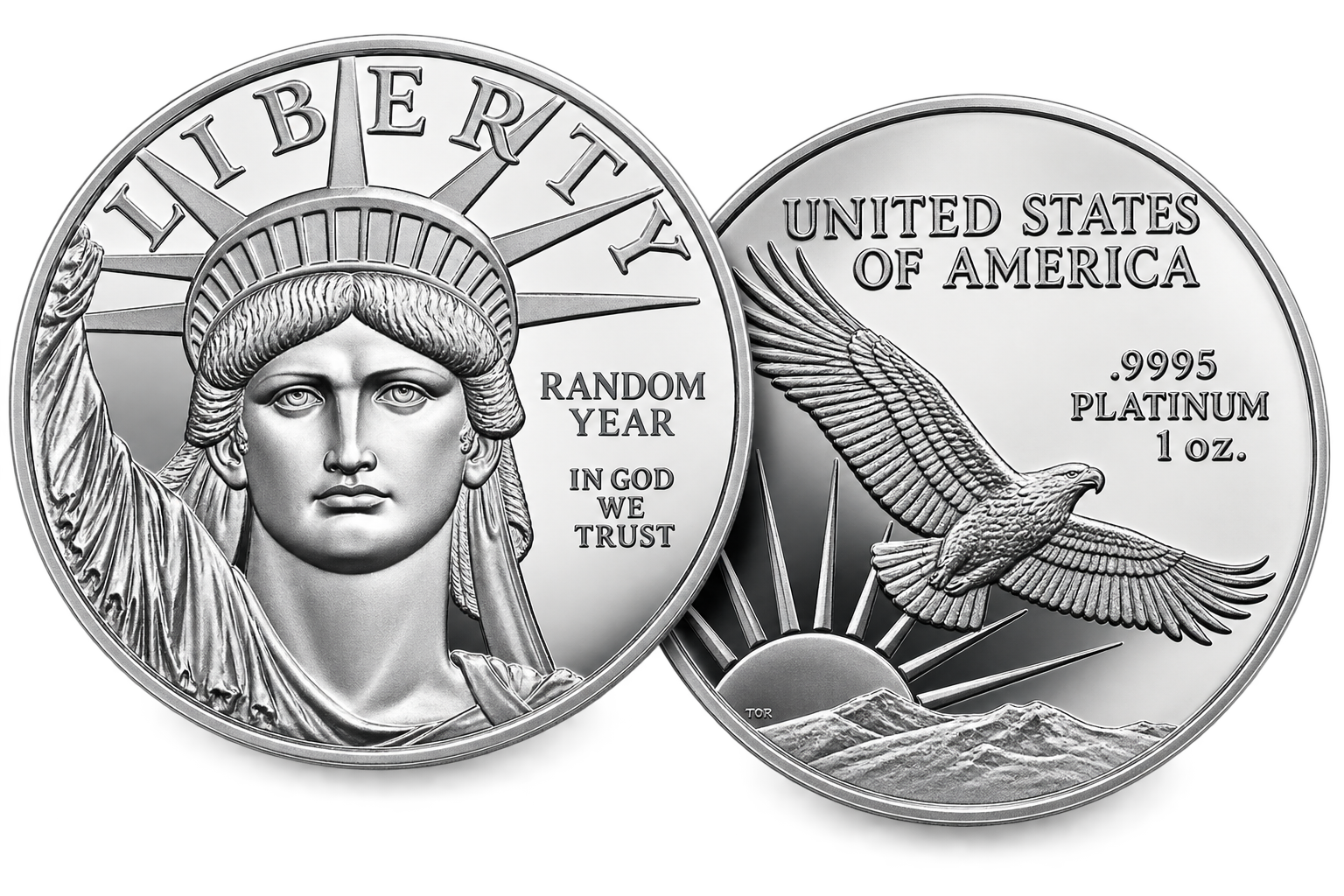
The Noble's short production run stands in contrast to the coins that followed it. The Canadian Platinum Maple Leaf launched in 1988 and, despite its own gap in fractional sizes, has continued in some form for decades. The American Platinum Eagle arrived even later, in 1997, and remains in active production today in its 1 oz size. All three share the same .9995 fineness standard, which underscores that the Noble wasn't a lesser or experimental product — it simply came first, and the programs that followed built on the same purity benchmark it established.
Best Use Case Today
The Noble suits a buyer who wants genuine numismatic history alongside their platinum content — this is a coin with a real, citable "first" behind it, not just a design story. It's a strong fit for someone building a collection around platinum coin history specifically, or simply someone who wants a less common alternative to the Eagle or Maple Leaf. If you're deciding between a bar or a coin more generally, our guide on platinum bars vs. platinum coins covers that broader decision.
Frequently asked questions
Was the Isle of Man Noble really the first platinum bullion coin?
It's widely credited as the first coin specifically designed and marketed as an investment-grade platinum bullion product, first struck in 1983. Platinum coins existed earlier, but mainly as commemoratives rather than bullion products for investors.
Why did the Isle of Man stop making the Noble?
The main bullion series ran for six years, from 1983 to 1989, before regular production ended. Later commemorative and special issues appeared under different arrangements, but the original run was always a relatively short series compared to coins that followed it.
What fineness is the Isle of Man Platinum Noble?
The Noble is .9995 fine platinum, the same purity standard used by the platinum coins that came after it, including the Canadian Platinum Maple Leaf and American Platinum Eagle.
Is the Isle of Man Noble legal tender?
Yes, it carries legal tender status from the Isle of Man, though similar to the South African Krugerrand, its value is defined by its platinum content rather than a separate, fixed face value.
Is the Noble a good coin for a first platinum purchase?
It can be, especially if the coin's history appeals to you. For the most straightforward, widely recognized starting point, a current-production coin like the Eagle or Maple Leaf may be easier to compare pricing on, but the Noble is an equally legitimate .9995 platinum coin.
Where to go from here
To see other platinum coins we carry, browse our Platinum Coin category, or our platinum selection more broadly for bars as well. And if a smaller size interests you, our guide on whether the smallest platinum coin size is worth it covers that trade-off.
This article is for general information only and is not financial, tax or legal advice. Precious metals prices fluctuate and past performance does not guarantee future results. Consult a licensed financial or tax professional about your own situation.