
Platinum bars and platinum coins contain the same .9995 fine metal and are equally legitimate ways to hold platinum — the real differences are premium, recognizability, and what each form offers beyond bullion value. Bars generally cost less per ounce and come in more size options, from a single gram up to a kilo. Coins cost more but carry legal tender status, government backing you can point to by name, and — for certain certified or limited pieces — room to develop value beyond melt. Neither form is the "better" platinum purchase; the right one depends on what you're optimizing for.
This guide compares the two forms directly, corrects a common myth about IRA eligibility, and gives you a framework for choosing. If you already know which you want, browse our platinum coins or a 1 oz platinum bar to see current live pricing.
What Actually Differs Between a Platinum Bar and a Platinum Coin
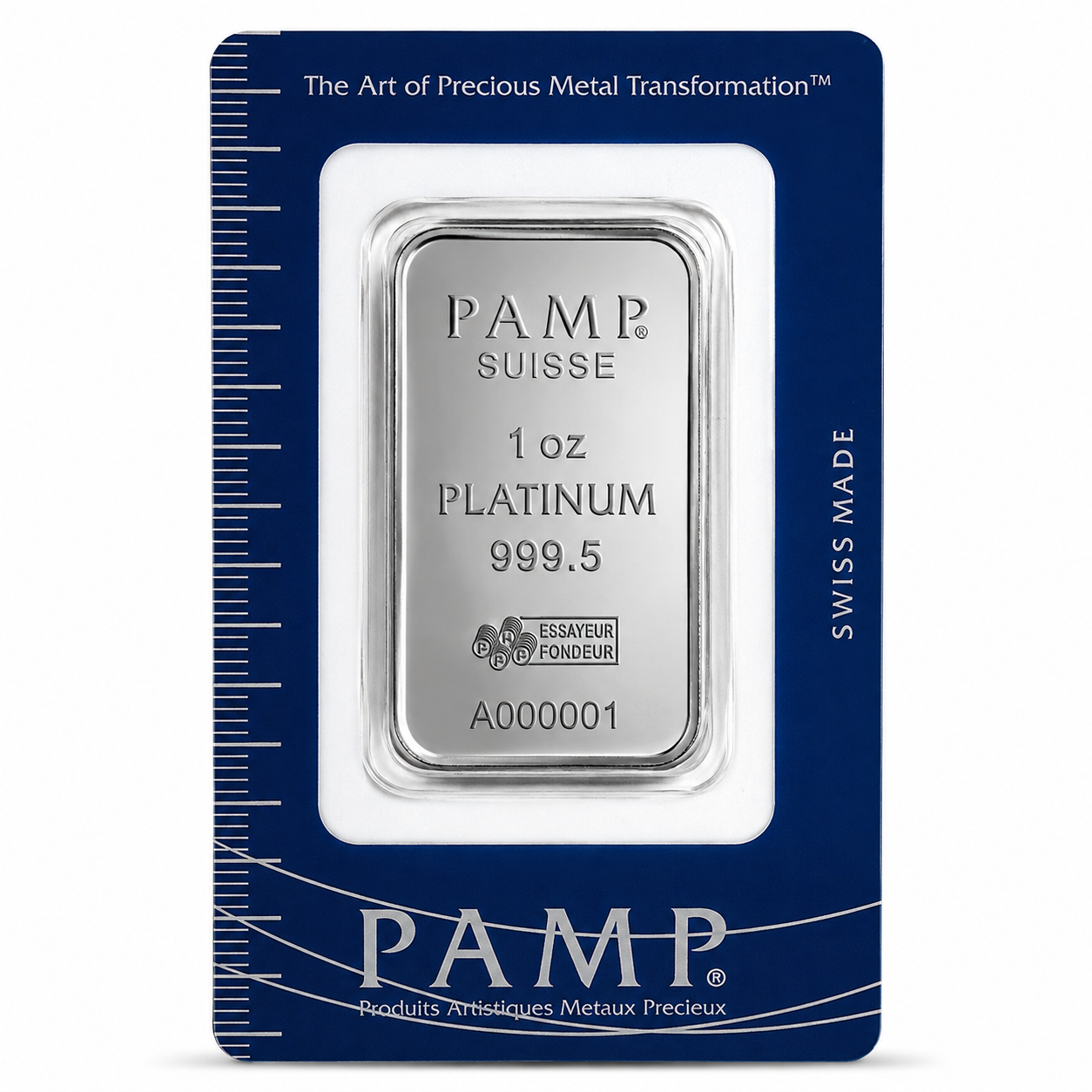
Both forms are typically .9995 fine platinum, so purity isn't the differentiator. What differs is origin and legal status. A coin like the American Platinum Eagle or Platinum Maple Leaf Coin is struck by a national mint, carries a face value, and is legal tender in its country of issue — even though its market value runs far above that face value. A bar has no face value or legal tender status; it's simply a cast or minted ingot of metal backed by the refiner's guarantee rather than a government's. Coins also tend to carry more elaborate designs and security features, while bars are typically plain, functional, and focused on getting the most metal into the smallest, cheapest-to-produce package.
Premium: Why Coins Usually Cost More Per Ounce
Coins generally carry a higher premium over spot than bars of comparable weight. Part of that comes from the more detailed minting process — a coin's design, edge work, and security features cost more to produce than a bar's flat, simple form. Part of it is brand and government backing: a coin from a national mint carries recognition a generic bar doesn't, and that recognition supports demand even when it doesn't change the underlying platinum content. Bars, especially larger ones, spread their lower fabrication cost over more ounces, which is why premium per ounce tends to shrink as bar size grows — a pattern covered in more detail in our guide on whether a 10 oz platinum bar is worth it for a big purchase.
IRA Eligibility: Bars and Coins Are More Alike Than You'd Think
If you've read anything about gold IRAs, you may have come across the American Gold Eagle's special legal exception, since it's allowed in IRAs despite not meeting the general gold purity threshold. Platinum doesn't have a comparable quirk. Under federal tax law, U.S.-minted platinum coins and platinum bullion of at least .9995 fine from an accredited refiner — consistent with London Platinum and Palladium Market standards — can both qualify for a self-directed precious metals IRA. There's no meaningful eligibility advantage for one form over the other. What does matter, regardless of whether you choose a bar or a coin, is that IRA-held metals are generally required to be held by an IRS-approved custodian or depository rather than at home. Confirm specifics with your custodian and a tax professional before buying for a retirement account.
Side-by-Side: Platinum Bars vs. Platinum Coins
| Factor | Platinum bars | Platinum coins |
|---|---|---|
| Fineness | .9995 | .9995 |
| Legal tender status | None | Yes, in country of issue |
| Typical premium per ounce | Lower | Higher |
| Size options | Very wide, 1 gram to 1 kilo or more | Limited to sizes the mint issues |
| Design | Plain, functional | Detailed, often changes by year |
| Room for collector value | Rare, mainly older discontinued brands | More common in certified or limited pieces |
| IRA eligibility | Yes, if accredited and .9995 fine | Yes, if a qualifying government-minted coin |
Choose Platinum Bars If… Choose Platinum Coins If…
Choose platinum bars if:
- You want the lowest possible premium per ounce
- You want more flexibility in exactly how much platinum you buy at once
- Design and legal tender status don't matter to you
Choose platinum coins if:
- You want something more recognizable to a casual buyer or gift recipient
- You like the idea of a government-backed, legal tender piece
- You're open to a certified or limited coin developing value beyond bullion
What Dealers See: Resale and Recognition
In practice, both forms resell without much trouble as long as they're from a recognized source and, for bars, still sealed in original assay packaging. Coins have a slight edge with less experienced buyers — a recognizable design like an Eagle or Maple Leaf needs less explanation than a plain bar when you're selling to someone unfamiliar with bullion. That said, dealers who work with platinum regularly price both forms off the same spot price and treat a sealed, accredited bar just as seriously as a coin.
Frequently asked questions
Are platinum bars or platinum coins a better investment?
Neither is objectively better. Bars typically cost less per ounce and offer more size flexibility; coins cost more but carry legal tender status and broader recognition. The right choice depends on your priorities, not on any real difference in the platinum itself.
Do platinum coins have an IRA advantage over bars?
Not really. U.S.-minted platinum coins and accredited platinum bullion of at least .9995 fine can both qualify for a self-directed precious metals IRA. Unlike gold, platinum doesn't have a special coin-only exception. Confirm eligibility with your custodian before buying for a retirement account.
Why do platinum coins cost more than bars?
Coins require a more detailed minting process — design, edge work, and security features — which costs more to produce than a bar's plain, simple form. Government backing and brand recognition also support stronger demand for coins, independent of the metal content.
Can a platinum bar be worth more than its metal content?
Occasionally, for older, discontinued bars from well-known refiners that have developed collector interest. Most current-production platinum bars, though, trade almost entirely off their metal weight and purity rather than any collector premium.
Which is easier to sell, a bar or a coin?
Both sell easily to an experienced bullion dealer. Coins can be slightly easier to sell to a less experienced buyer, since a recognizable design needs less explanation than a plain bar. A sealed, accredited bar is just as legitimate, though.
Where to go from here
If you want to browse everything platinum we carry, start with our platinum selection. And if you're still weighing platinum against gold as a metal, our guide on why platinum trades for less than gold per ounce covers that bigger decision.
This article is for general information only and is not financial, tax or legal advice. Precious metals prices fluctuate and past performance does not guarantee future results. Consult a licensed financial or tax professional about your own situation.