
Expect to pay meaningfully more over spot for an American Silver Eagle than for a generic silver round or bar — and that's normal, not a sign you're being overcharged. The premium reflects government-guaranteed weight and purity, a design that's been in continuous production since 1986, and demand that consistently outpaces what the U.S. Mint can strike. How much more depends on whether you're buying raw bullion, a certified coin, or a proof version, since each sits at a different point on the premium ladder.
This guide explains why that gap exists, how the premium ladder works across bullion, certified, and proof versions, and how to tell whether a specific quote is reasonable. If you're ready to buy, our American Silver Eagle coins are priced off live spot.
Why Silver Eagles Cost More Than Generic Silver Rounds
A generic silver round is priced almost entirely off its metal content — weight times spot, plus a modest fabrication markup. A Silver Eagle carries that same metal value plus something a generic round doesn't: a legal tender guarantee from the U.S. government. According to the U.S. Mint, each coin contains a minimum of 99.9% pure silver, authorized under Public Law 99-61, with its weight and purity officially guaranteed by the federal government. That backing, combined with the coin's status as the most recognized silver bullion coin in the US market, keeps demand consistently high relative to how many the Mint can actually strike in a given year — and when demand outpaces available supply, premiums widen.
The Premium Ladder: Bullion vs. Certified vs. Proof
| Version | What it is | Where it sits on premium |
|---|---|---|
| Raw bullion (BU) | Uncertified, brilliant uncirculated | Lowest of the three tiers |
| Certified (MS69/MS70) | Graded and encapsulated by PCGS or NGC | Higher, reflects the condition guarantee |
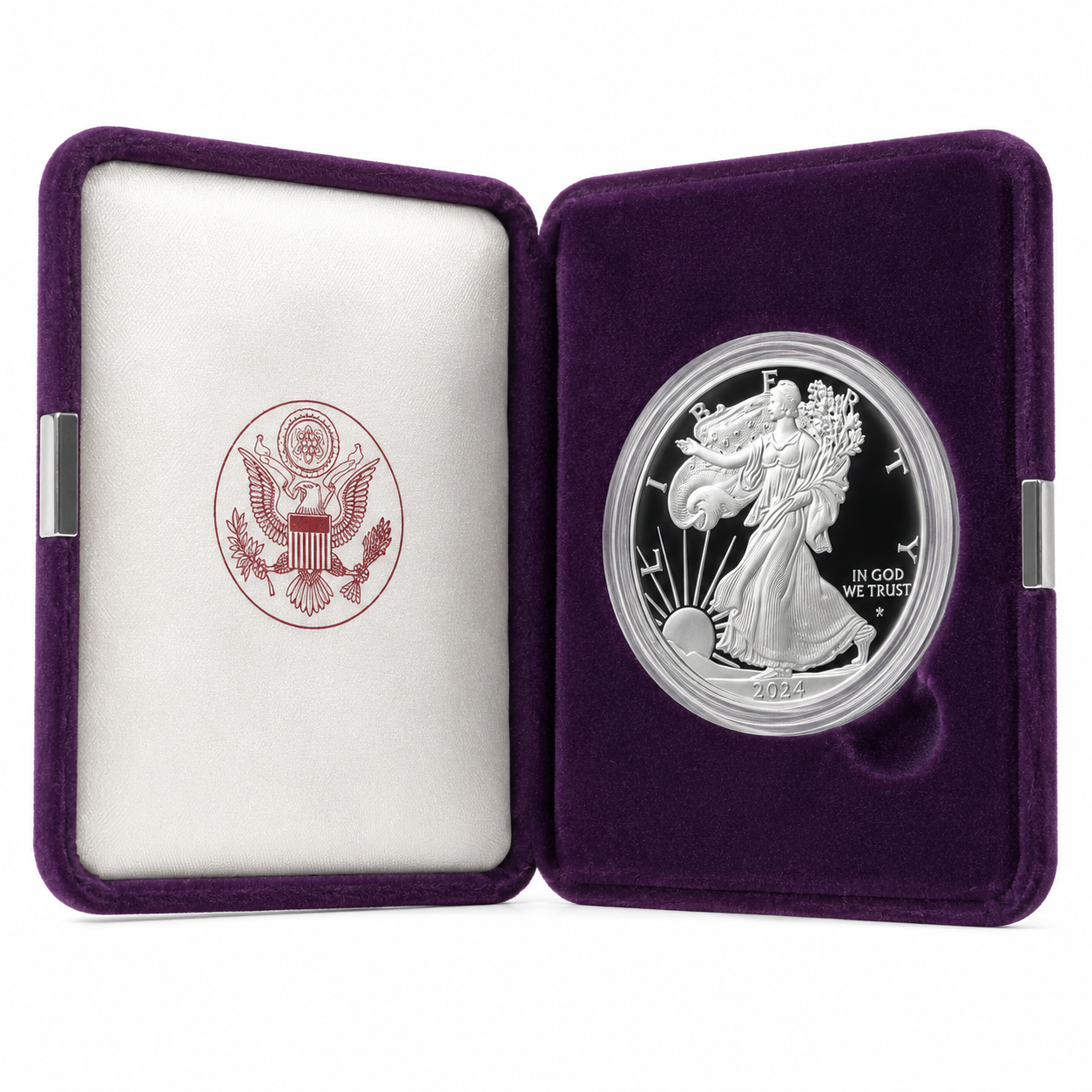
| Proof | Special strike, lower mintage, collector demand | Highest, reflects limited production |
Raw, uncertified bullion coins carry the lowest premium of the three, since you're paying almost entirely for the metal and the Mint's guarantee. A certified coin in an MS69 or MS70 holder, like our 2026 250th Anniversary Privy Silver Eagle, costs more because a third-party grading service has verified its condition, which removes uncertainty for both buyer and seller. A proof coin costs more still, since proof coins are struck differently, produced in smaller numbers, and sold to collectors as much as investors — our Proof American Silver Eagle Coins and 1986-2024 Proof Silver Eagle Set sit firmly in that higher tier.
A Worked Example: Comparing Premiums
Here's the concept using clearly illustrative numbers, not live prices — check the current premium on each product page before buying. If a generic 1 oz silver round carried an illustrative $2 premium over spot, a raw bullion Silver Eagle might carry something like a $4 to $6 premium for the same weight, reflecting its government backing and stronger demand. A certified MS70 example of the same coin could run substantially higher still, and a proof version higher again. The dollar gap moves with market conditions, but the ranking — generic round, then raw Eagle, then certified, then proof — tends to hold regardless of where spot itself sits.
How to Tell If a Premium Is Reasonable
- Compare the quoted price to the live price on more than one Silver Eagle listing, not just one
- Check whether the premium matches the version you're buying — raw, certified, and proof carry different baselines
- Ask what's driving an unusually high quote: a specific date, a low mintage, or genuine certification, not just markup
Remember that silver's 2025–2026 rally, tracked by the Silver Institute, has pushed the dollar value of silver itself sharply higher — which means the same percentage premium now translates into a larger raw dollar amount than it used to. Compare percentages, not raw dollar figures, when judging whether a quote is fair.
Frequently asked questions
Why do Silver Eagles cost more than silver rounds?
Silver Eagles carry government-guaranteed weight and purity and are the most recognized silver bullion coin in the US market, which keeps demand high relative to how many the Mint can strike each year. Generic rounds are priced almost entirely off metal content with a smaller fabrication markup.
Is a graded Silver Eagle worth the extra premium?
It depends on your goal. A certified coin costs more because a third-party grading service has verified its condition, which can matter for resale or collecting. For pure bullion exposure with no plans to grade or collect, a raw coin gets you the same silver content for less.
Why are proof Silver Eagles so much more expensive?
Proof coins are struck using a different, more labor-intensive process, produced in smaller numbers than bullion versions, and marketed to collectors as much as investors. That combination of lower mintage and collector demand pushes their premium well above raw bullion coins.
Are Silver Eagles IRA-eligible?
Yes. According to the U.S. Mint, American Eagle Silver Bullion Coins meet the purity requirements for inclusion in a self-directed precious metals IRA. This isn't tax advice — confirm eligibility and rules with your IRA custodian and a tax professional.
How do I know if a premium quote is too high?
Compare the same version — raw, certified, or proof — across more than one listing rather than judging a single quote in isolation. Focus on the percentage over spot rather than the raw dollar amount, since higher silver prices make premiums look larger in dollar terms even when the percentage hasn't moved.
Where to go from here
If you're comparing options, our silver coins category covers the full range beyond just Silver Eagles, and our silver bars category shows how generic bullion premiums compare by contrast. If you're still deciding between silver and gold as a starting metal, our guide on silver bars vs. gold bars covers that bigger decision.
This article is for general information only and is not financial, tax or legal advice. Precious metals prices fluctuate and past performance does not guarantee future results. Consult a licensed financial or tax professional about your own situation.