
A silver bar and a silver round are more alike than most buyers expect: both are privately minted, carry no legal tender status, and are priced almost entirely off their silver content. Neither carries the government-backing premium of a coin like the American Silver Eagle. The real differences are shape and, often, design — rounds tend to come in more decorative or thematic designs, while bars are typically plainer and sometimes marginally cheaper per ounce.
This guide covers what actually separates the two, compares them side by side, and gives you a framework for choosing. Browse our Silver Bars or Silver Rounds to see live pricing on both.
What Actually Separates a Bar From a Round
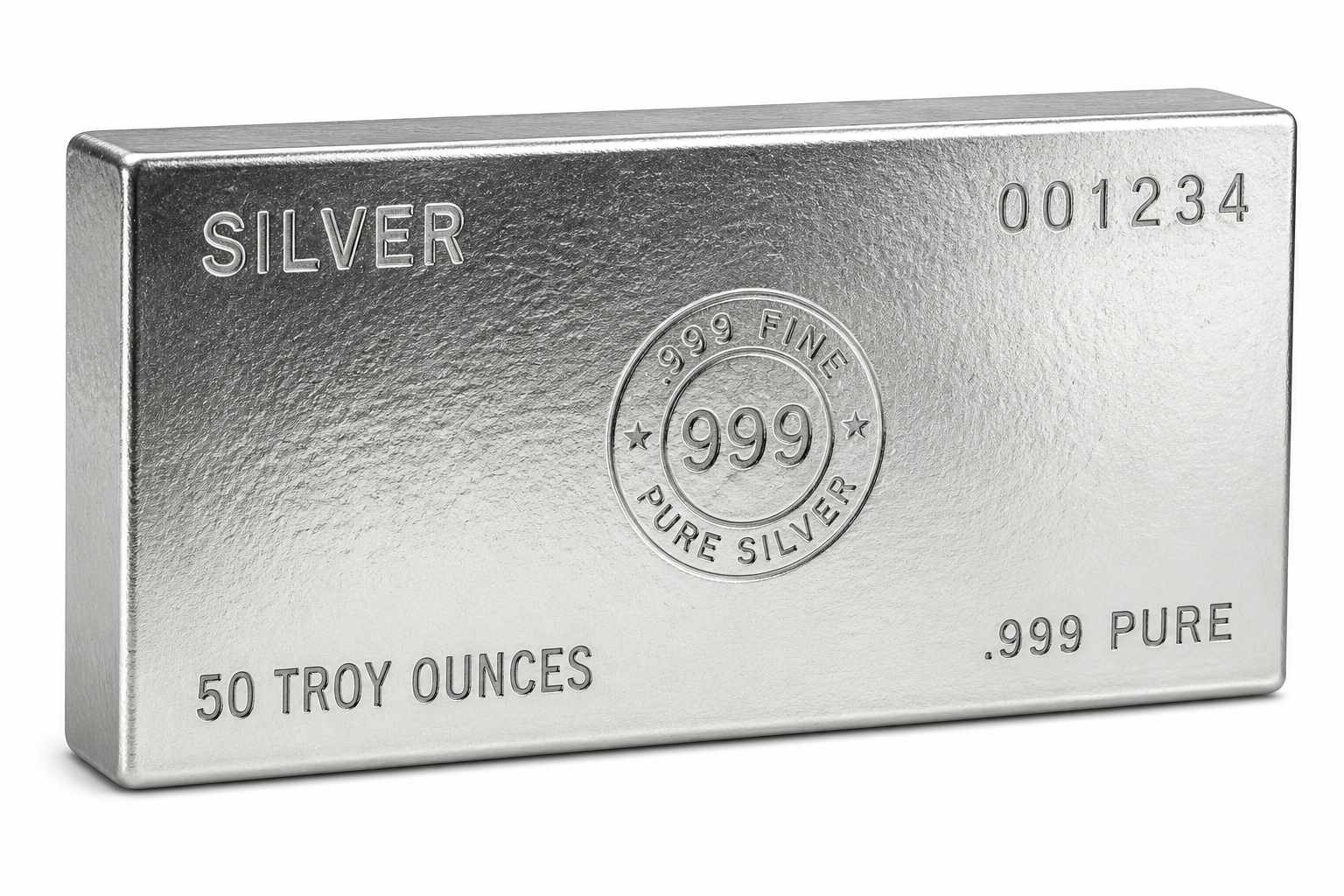
A silver bar is a cast or minted rectangular ingot with no face value. A silver round is coin-shaped — round, with a design on both sides — but it's still privately minted rather than issued by a national government, which means it isn't legal tender either. That's the key point of confusion: a round looks like a coin, but legally and functionally it's much closer to a bar. Some rounds carry a "fantasy" denomination stamped on them for decorative effect, but according to the FTC, precious-metals marketing that could mislead buyers about a product's actual legal status is exactly the kind of thing worth reading carefully — a number stamped on a round isn't real currency, and reputable sellers make that clear.
Design: Where Rounds Really Differ From Bars
Rounds tend to carry more elaborate and varied designs than generic bars. A 5 Oz Buffalo Silver Round or a themed set like our 12 Zodiac Silver Round Set shows the kind of design variety private mints lean into with rounds — sports teams, zodiac signs, wildlife, and historical motifs are all common. A plain bar like our 50 Oz Silver Bar, Our Choice, by contrast, is usually simple and functional, prioritizing metal content over decoration.
Side-by-Side: Silver Bars vs. Silver Rounds
| Factor | Silver Bars | Silver Rounds |
|---|---|---|
| Legal tender status | None | None |
| Issued by | Private refiner | Private mint |
| Typical design | Plain, functional | Often decorative or thematic |
| Typical premium | Usually lowest or comparable | Similar, sometimes slightly higher for detailed designs |
| Shape/stacking | Flat, stacks compactly | Round, stacks in tubes |
| Best for | Lowest cost per ounce | Design variety and collectibility |
Choose Bars If… Choose Rounds If…
Choose bars if:
- You want the simplest, most functional way to hold silver
- Design and theme don't matter to you
- You want the most straightforward option to stack and store
Choose rounds if:
- You like the idea of a themed or decorative design
- You want something that looks and feels more like a coin
- You're interested in variety across a stack rather than uniform bars
How Both Compare to a Legal Tender Coin
Both bars and rounds sit below a legal tender coin like the American Silver Eagle on the premium ladder, since neither carries government backing or official face value. Our guide on 1 oz silver bar vs. 1 oz silver coin covers that comparison in detail — the short version is that a coin costs more precisely because it is legal tender, while a bar and a round sit at roughly the same tier below it, differing mainly in shape and design rather than legal status.
What Dealers See: Storage and Resale
Both forms resell easily to an experienced dealer, and neither has a meaningful edge over the other in legitimacy or liquidity. Bars are marginally easier to stack in bulk trays; rounds stack neatly in cylindrical tubes, which some buyers find more satisfying to organize and count. Neither storage format is objectively better — it comes down to personal preference once you're past the basic question of secure, dry storage.
Frequently asked questions
Is a silver round the same as a silver coin?
No. A round is coin-shaped but privately minted, not issued by a government, and carries no legal tender status. A coin like the American Silver Eagle is struck by a national mint and is legal tender, which is why it typically costs more.
Are silver rounds a good investment?
Rounds are a legitimate way to hold silver, priced primarily off metal content like bars are. Whether they're the "right" choice depends on your preferences around design and stacking rather than any inherent investment advantage over bars.
Do silver rounds cost more than silver bars?
Not necessarily. Premiums are usually similar between bars and rounds of the same weight and fineness, though a round with a more detailed or limited design can sometimes carry a slightly higher premium than a plain, generic bar.
Why do some silver rounds have a dollar amount stamped on them?
That's a decorative "fantasy" denomination, not real currency. Rounds aren't legal tender regardless of what number appears on them, so a stamped face value has no bearing on the round's actual value, which is based entirely on its silver content.
Which is easier to store, bars or rounds?
Both store easily. Bars stack flat and compactly in trays; rounds stack in cylindrical tubes. Neither format is objectively better for storage — it comes down to personal preference once you have secure, dry storage in place.
Where to go from here
If you want the broader picture of how bars, coins, and rounds all fit together, our explainer on what gold bullion actually means covers that same distinction across every metal we carry.
This article is for general information only and is not financial, tax or legal advice. Precious metals prices fluctuate and past performance does not guarantee future results. Consult a licensed financial or tax professional about your own situation.