
If you're deciding where to start, silver bars require less capital per ounce and are more approachable for a smaller first purchase, but you'll need considerably more physical storage space and typically pay a higher percentage premium over spot. Gold bars cost more per ounce and demand a larger upfront budget, but take up far less space per dollar invested and usually carry a lower percentage premium. Neither metal is the objectively "right" first purchase — the better starting point depends on your budget, how much space you're willing to dedicate to storage, and how much price swing you're comfortable with.
This guide walks through the real trade-offs — capital, storage, premiums, and volatility — then gives you a framework for deciding. If you already know which metal you want to start with, browse our gold bars or silver bars to see current live pricing.
The Core Trade-off: Capital vs. Storage
The biggest practical difference between the two metals for a first purchase is how much physical space your money buys. Silver is far cheaper per ounce than gold, so the same dollar amount buys many more ounces — and many more ounces means more physical bulk to store securely. A 100 Oz Silver Bar is roughly the size of a large book, while a similarly valued amount of gold fits in the palm of your hand as a single small bar, like a Perth Mint 1 oz Gold Bar. If storage space is tight or you'd rather keep your holding compact, that alone can tip the decision toward gold even on a modest budget.
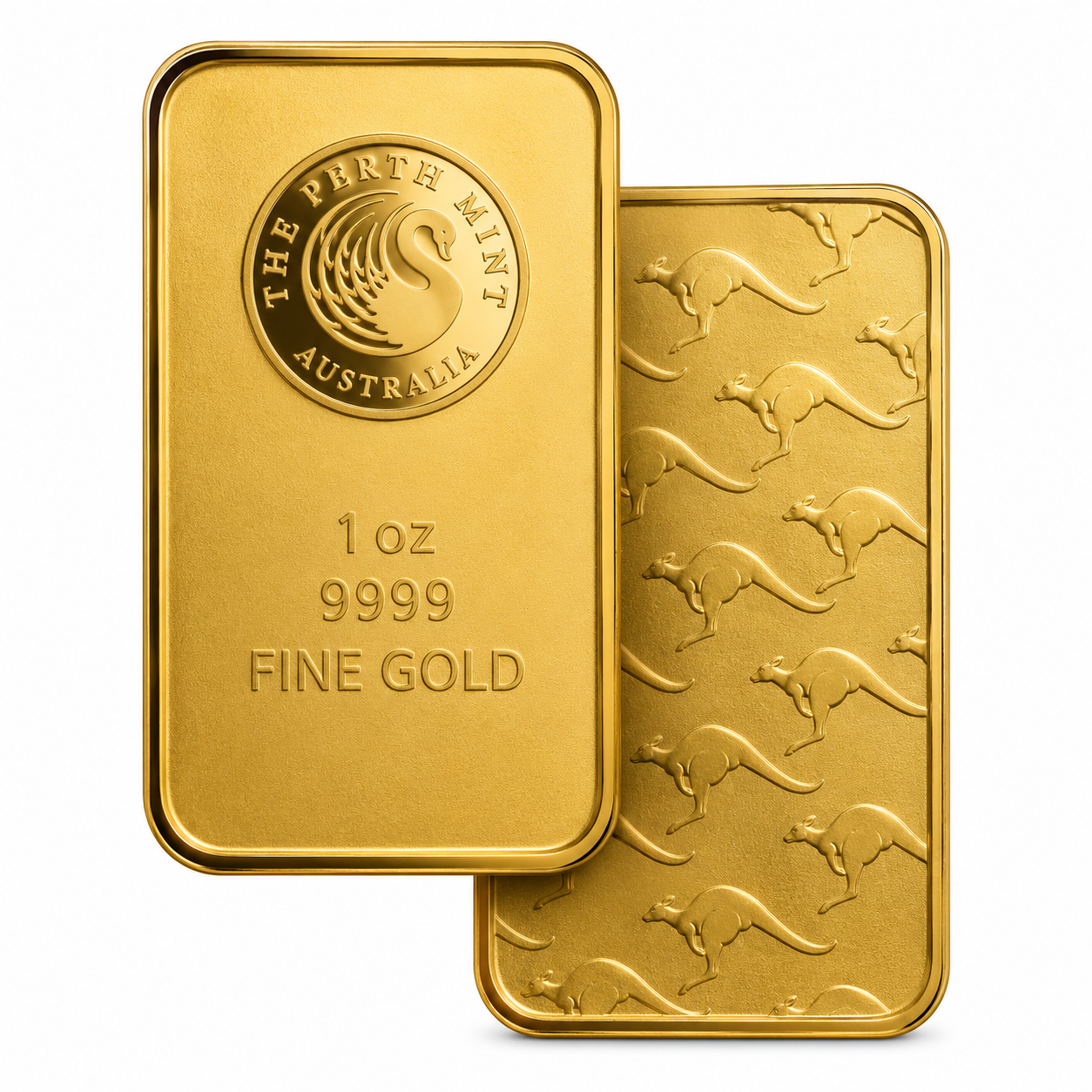
Why Silver's "Cheap Entry Point" Reputation Has Changed
Silver has long been pitched as the accessible metal for beginners, and it's still far cheaper per ounce than gold. But that gap has narrowed more than most people realize. According to the Silver Institute, silver prices rose by as much as 147% in 2025 and touched a record high above $121 an ounce on January 29, 2026, before pulling back. The institute also expects the silver market to run its sixth consecutive annual supply deficit in 2026. None of that means silver is now expensive compared to gold — it's still meaningfully cheaper per ounce — but the "silver is the cheap way in" framing deserves a second look before you assume it works the way it did a few years ago.
Why Silver Tends to Move More Than Gold
More than half of annual silver demand comes from industrial uses — solar panels, electric vehicles, electronics, and similar applications — which makes silver's price more exposed to manufacturing cycles and technology demand than gold's. World Gold Council data shows gold's demand leans much more heavily on jewelry, investment, and central bank reserves — buyers who tend to keep buying regardless of the economic cycle. That structural difference is a big part of why silver has historically swung harder in both directions than gold, and 2025's rally is a recent example of that pattern playing out.
Side-by-Side: Silver Bars vs. Gold Bars for a First Purchase
| Factor | Silver bars | Gold bars |
|---|---|---|
| Capital needed per ounce | Lower | Higher |
| Storage space per dollar invested | More | Less |
| Typical premium over spot | Higher, percentage-wise | Lower, percentage-wise |
| Price volatility | Historically higher | Historically lower |
| Main demand driver | Over half industrial | Jewelry, investment, central banks |
| 2025–2026 price behavior | Sharp rally, record high, then pullback | Steadier climb |
Choose Silver Bars If… Choose Gold Bars If…
Choose silver bars if:
- You want to start with a smaller total dollar commitment
- You have secure storage space and don't mind more physical bulk
- You're comfortable with more price movement in either direction
Choose gold bars if:
- You'd rather hold more value in less physical space
- You want historically steadier day-to-day price behavior
- Your budget can comfortably absorb a higher cost per unit
A Worked Example: $1,000 Split Two Ways
Here's the math using clearly illustrative numbers, not live prices — check current spot on each product page before you buy. If gold spot were $4,000 an ounce, $1,000 would buy about a quarter ounce of gold. If silver spot were $80 an ounce, that same $1,000 would buy around 12.5 ounces of silver — vastly more physical bulk to store, even though the dollar amount is identical. That's the trade-off in concrete terms: the silver purchase is more metal you can see and hold, and the gold purchase is a small, dense unit that's easier to secure.
What Dealers See: Which Beginners Regret
The regret we hear most often isn't about which metal someone chose — it's about not thinking through storage before buying silver in bulk, or feeling like a small gold purchase "isn't enough" compared to a pile of silver coins and bars. Both reactions come from comparing the wrong things. A quarter ounce of gold and twelve ounces of silver can represent the same dollar amount; one just looks and feels more substantial. If you're brand new, starting with an amount you're fully comfortable holding — in whichever metal — matters more than which one you pick first.
Frequently asked questions
Is silver or gold better for a first-time buyer?
Neither is objectively better. Silver needs less capital and lets you start smaller, but requires more storage space and has historically moved more than gold. Gold costs more per ounce but is more compact and has historically been steadier. The right first purchase depends on your budget and storage situation.
Why did silver prices spike so much in 2025?
According to the Silver Institute, silver rose as much as 147% in 2025 and hit a record high above $121 an ounce in January 2026, driven by strong retail investment demand alongside a persistent supply deficit. It's one of the sharpest moves in the metal's recent history.
Is silver still cheaper than gold to start with?
Yes, silver remains far cheaper per ounce than gold even after its 2025–2026 rally. The gap has narrowed somewhat, but silver still requires a much smaller dollar commitment to acquire a meaningful starting position than gold does.
Which metal has higher premiums over spot?
Silver typically carries a higher percentage premium over spot than gold, since fabrication costs are spread over less metal value per ounce. Gold's higher per-ounce value means the same fabrication cost is a smaller percentage of the total price.
Can I buy both gold and silver as a beginner?
Yes, plenty of buyers split a first purchase between the two rather than choosing one exclusively. There's no rule requiring you to pick just one metal, and doing so can spread out both the cost and the storage considerations.
Where to go from here
Whichever metal you start with, our gold coins and silver coins categories are worth a look too if bars feel like too large a first step — coins let you start even smaller while staying easy to resell individually. And if platinum interests you as a third option down the road, our guide on why platinum trades for less than gold per ounce covers how that metal fits into the picture.
This article is for general information only and is not financial, tax or legal advice. Precious metals prices fluctuate and past performance does not guarantee future results. Consult a licensed financial or tax professional about your own situation.