
Gold proof coins are struck using a completely different process than bullion coins — specially polished dies and planchets, multiple strikes, and a mirror-and-frost finish — produced in far smaller numbers specifically for collectors rather than for straightforward bullion investment. A proof coin usually contains the exact same gold content as its bullion counterpart from the same mint and year, but costs meaningfully more because of how it's made and how few are struck. Understanding that difference explains why two coins with identical gold content can carry very different price tags.
This guide covers how proof coins are actually made, why that process costs more, and who a proof coin genuinely suits versus a standard bullion strike. Browse our Gold Proof Coins category to see current options.
How Proof Coins Are Actually Made
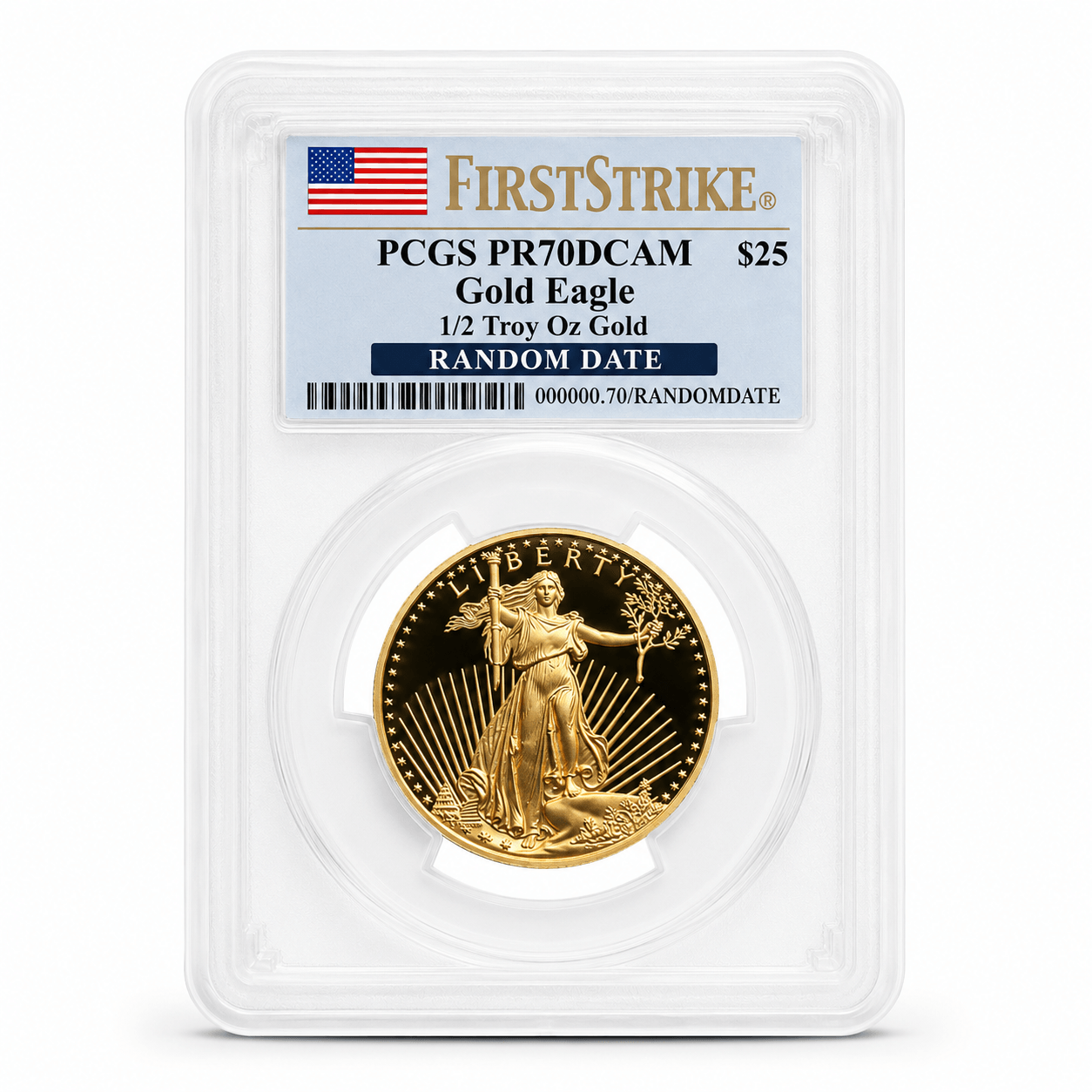
According to the U.S. Mint, a proof coin is struck from specially polished dies and planchets, often struck more than once to bring out the sharpest possible detail. The result is a mirror-like background (the field) paired with a frosted, sculpted foreground (the devices) — often called a cameo effect. Standard bullion and circulating coins, by contrast, are struck once at higher speed from dies that aren't given the same polishing treatment, which is why a bullion coin has a more uniform, brilliant finish rather than the mirror-and-frost contrast of a proof.
The planchets themselves go through an extra step too. The Mint's own production process describes proof and uncirculated planchets going through burnishing — tumbling with cleaning agents and small metal pellets to smooth and polish the surface — before they're hand-dried and struck. That extra handling is part of why proof coins take longer and cost more to produce than a standard bullion strike.
Same Gold Content, Different Purpose
A proof version of a coin typically contains the exact same weight and fineness of gold as its bullion counterpart — a proof 1 oz Gold Eagle still contains 1 troy ounce of gold at the same 91.67% purity as the bullion version. What differs is intent and mintage. Proof coins are struck in far smaller numbers, packaged individually with a certificate of authenticity, and marketed to collectors rather than sold as a straightforward way to hold gold. Certified examples like a PR70/PF70 1/2 oz Gold Eagle, graded by a third-party service, sit even further into collector territory, since the numeric grade adds another layer of verification and demand on top of the proof strike itself.
Why Proof Coins Cost More
Three factors combine to push proof coin prices above bullion: the more labor-intensive striking process, the lower mintage relative to bullion strikes of the same coin, and demand from collectors who want the coin specifically for its proof finish rather than its gold content. None of that changes how much gold is actually in the coin — it changes what you're paying for beyond the metal. A coin like our 2010 Proof Gold Buffalo Coin illustrates this well: it carries the same .9999 fine gold as a bullion coin from our Gold American Buffalo Coins category in that weight, but at a meaningfully different price point reflecting its proof strike and lower mintage.
Bullion vs. Proof: Side-by-Side
| Factor | Bullion strike | Proof strike |
|---|---|---|
| Finish | Brilliant, uniform | Mirror fields, frosted devices |
| Strikes | Struck once | Struck multiple times |
| Mintage | Higher | Lower |
| Packaging | Often simple or bulk | Individual, with certificate |
| Priced primarily off | Gold content | Gold content plus collector demand |
Who Should Buy Gold Proof Coins
Proof coins suit collectors, gift-givers who want something visually distinctive, and buyers who specifically want the lower-mintage, certificate-backed version of a coin. If your only goal is holding the most gold for your budget, a standard bullion coin gets you the same metal content for less, since you won't be paying for the finish, packaging, or collector premium. Neither approach is wrong — they're simply answering different questions. If you want the widely recognized bullion version instead, our American Gold Eagle Coins are priced off live spot.
Frequently asked questions
Does a proof coin contain more gold than a bullion coin?
No. A proof version of a coin typically contains the exact same weight and fineness of gold as its bullion counterpart. The higher price reflects the more complex striking process and lower mintage, not additional metal content.
Why do proof coins have a mirror-like finish?
Proof coins are struck from specially polished dies and planchets, often more than once, which produces a mirror-like background paired with frosted, detailed design elements — sometimes called a cameo effect. Standard bullion coins are struck once from dies without that polishing treatment.
Are proof coins a good investment?
That depends on your goal. If you're optimizing for the lowest cost per ounce of gold, a bullion coin is more efficient. If you want a lower-mintage, collector-oriented piece, a proof coin offers that. This isn't financial advice — consider your own goals.
What does "cameo" mean on a proof coin?
Cameo describes the contrast between a proof coin's mirror-like fields and its frosted, sculpted design elements. The effect comes from the specially polished and treated dies used to strike proof coins, giving the raised details a matte, satiny look against the reflective background.
Do certified proof coins cost even more than regular proofs?
Often, yes. A certified example graded by a third-party service like PCGS or NGC adds an independent verification of condition on top of the proof strike itself, which can carry an additional premium beyond an uncertified proof coin of the same date.
Where to go from here
If premiums and pricing mechanics are still a little abstract, our guide on how much over spot to pay for a Silver Eagle walks through the same bullion-versus-certified-versus-proof ladder with concrete numbers, and our explainer on what gold bullion actually means covers the broader distinction between bullion and numismatic value.
This article is for general information only and is not financial, tax or legal advice. Precious metals prices fluctuate and past performance does not guarantee future results. Consult a licensed financial or tax professional about your own situation.