
How much over spot for a 1 oz gold bar? Less than you will pay on any one-ounce gold coin, more per ounce than on a 10 oz or kilo bar, and never a fixed figure anyone can promise in advance. The premium is what it costs to turn wholesale gold into a bar you can hold, plus the dealer's margin, and it moves with wholesale supply the same way spot moves with the market.
What you can do is measure it in about ten seconds on any dealer's page. Below: the formula that turns a listed price into a premium percentage, the five things that move it, a worked example, and the cost most buyers ignore until the day they sell. For live figures while you read, open our 1 oz gold bars page in another tab.
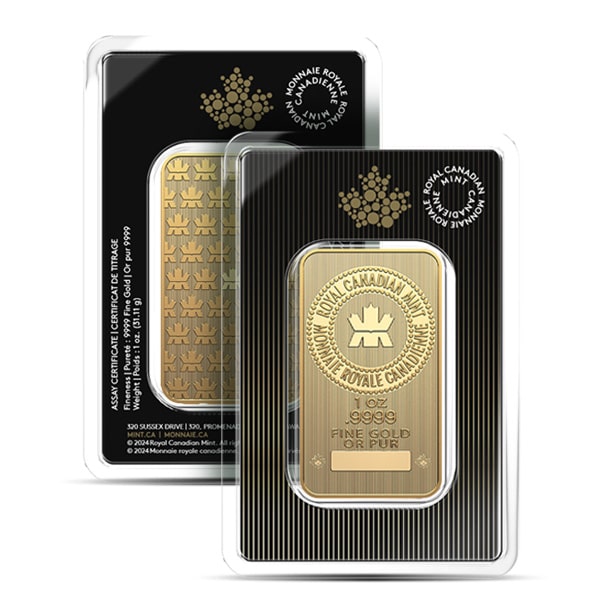
What the spot price actually prices
Spot is the price for immediate delivery of wholesale gold, quoted in US dollars per troy ounce, which is 31.1035 grams and heavier than the kitchen ounce. That difference is where a lot of first-time confusion starts.
Two reference points sit behind the number ticking on a dealer's site. The LBMA Gold Price, administered by ICE Benchmark Administration, is set in a tradeable electronic auction twice a day at 10:30 and 15:00 UK time and published in dollars per troy ounce. Gold futures trade almost around the clock alongside it on COMEX, where CME Group's rulebook sets one contract at 100 troy ounces of metal assaying to a minimum of 995 fineness.
Notice what both describe: large, wholesale, vaulted gold. Spot sits closer to the price of a 400-ounce bar in a London vault than to anything that arrives at your door, and nobody ships you a 400-ounce bar. The premium is the cost of that journey.
How much over spot for a 1 oz gold bar?
The honest answer is that no dealer can give you a permanent figure, and one who quotes a fixed premium as though it never moves is quoting marketing rather than pricing. Premiums track refinery output, freight, and how much retail demand is chasing the same product that week.
What does not change is the arithmetic. Any listed 1 oz gold bar price converts to a premium in one step:
- Metal value = spot per troy ounce × the bar's troy-ounce weight
- Premium in dollars = listed price − metal value
- Premium as a percentage = (premium in dollars ÷ metal value) × 100
Run that on three dealers within the same minute and you have a real comparison; run it across an afternoon and you have noise, because spot moved underneath you. It is also why a price you can only get by calling deserves care: a number you cannot check against live spot is not a number you can compare.
Five things that move the premium on a 1 oz gold bar
The refiner's name
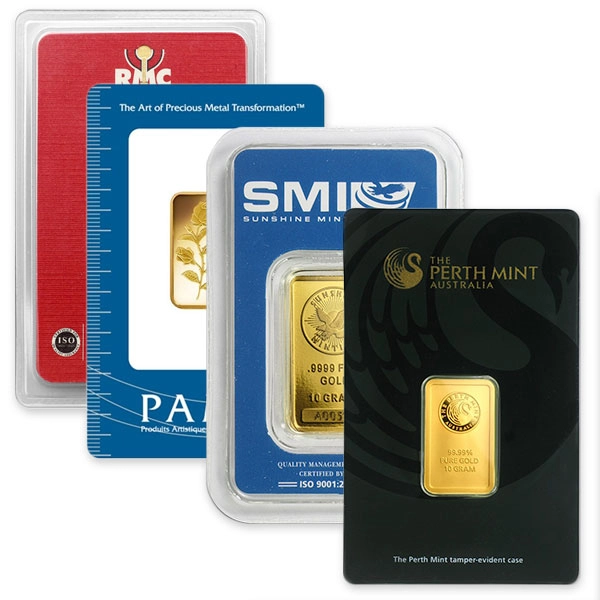
Bars from refiners on the LBMA's Good Delivery List move through the trade with less friction than bars nobody recognizes. Accreditation is not decorative: the LBMA requires an applicant refiner to show a tangible net worth of at least £15 million and annual refined output of at least 10 tonnes of gold. That standing is priced in, which is why PAMP Suisse gold bars carry a slightly higher premium than a generic bar and usually hand it back when you sell.
Whether it is sealed in assay
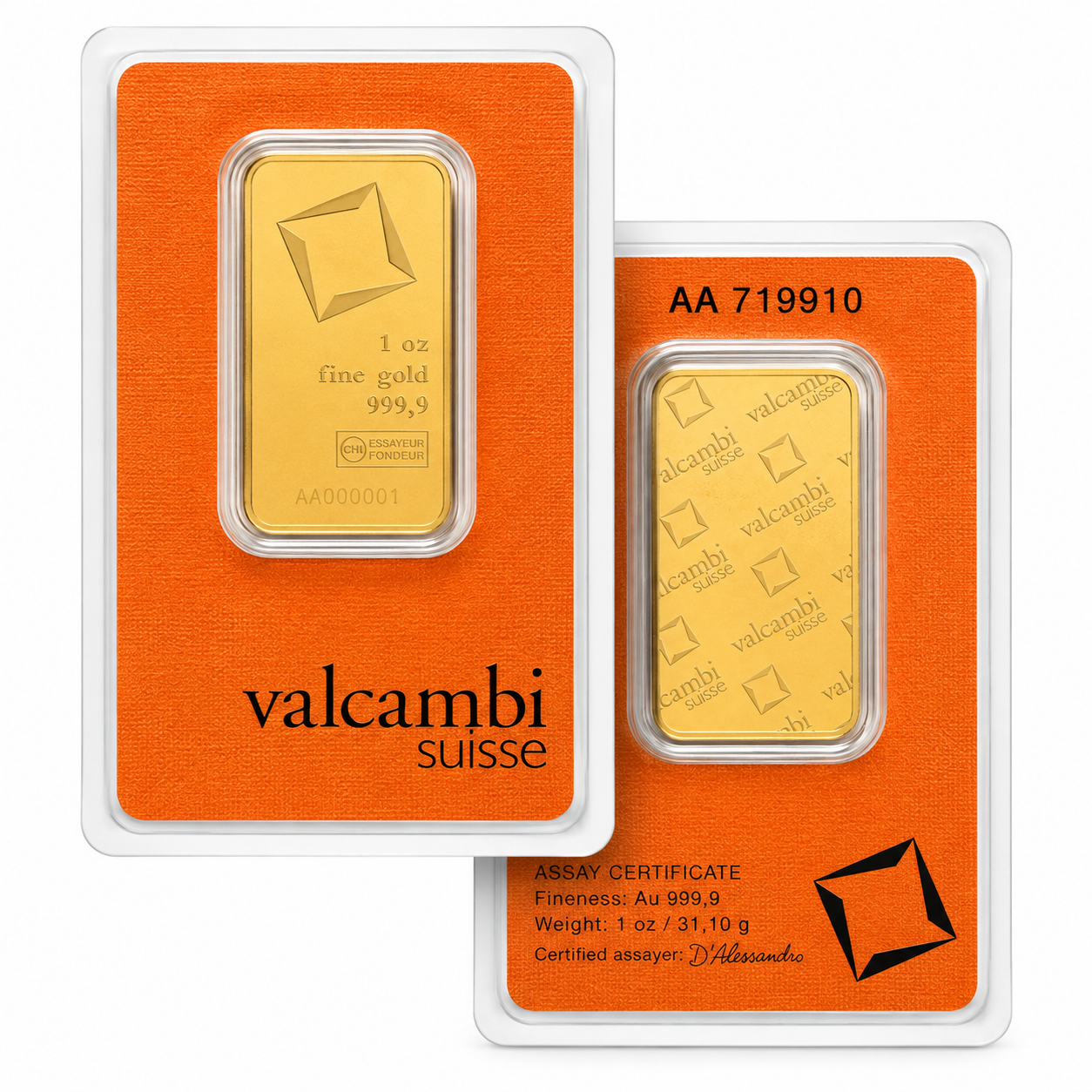
Most modern one-ounce bars arrive sealed in a tamper-evident card carrying the weight, fineness, serial number and an assayer's signature. That packaging adds a little to the premium and removes an argument later, because a sealed bar with a matching serial number sells far faster than a loose one a buyer has to test. The Valcambi 1 oz Gold Bar shows the format.
The size you buy
Fabrication cost per piece barely changes with size. Pressing, sealing and handling a one-gram bar costs a refiner roughly what a one-ounce bar costs, but that cost is spread over a thirty-first of the metal. That is why a 10 gram gold bar price works out higher per ounce than a one-ounce bar, why 10 oz gold bars work out lower again, and why kilo bars sit lower still.
How you pay
Payment method is a real line item, not a rounding error. Card and instant-payment rails cost a dealer a percentage of the order, a wire costs a flat fee, and cryptocurrency settles without the card networks taking a cut. Dealers who price honestly pass that difference back, which is why you can pay with crypto and save on our side.
How many you buy
Tiered pricing is normal across the trade. Ten bars cost a dealer barely more to pick, pack and insure than one, so the premium per bar usually falls as the count rises. Buying several together is often cheaper than spreading the same purchases over months.
| Factor | Pushes the premium down | Pushes the premium up |
|---|---|---|
| Size | 10 oz and kilo bars | Gram bars and fractionals |
| Refiner | Generic or unbranded | Accredited Swiss and sovereign-mint refiners |
| Packaging | Loose bar, no card | Sealed assay card with serial number |
| Payment | Wire or cryptocurrency | Card and instant-payment rails |
| Quantity | Several bars in one order | Single bar |
A worked example, with round illustrative numbers
The figures below make the arithmetic easy to follow. They are illustrative only, not a quote and not today's market, and the percentages are placeholders rather than published rates. Check live numbers on the product page.
| Format | Gold content | Metal value at an illustrative $3,000/oz | Illustrative premium | Price | Cost per troy ounce |
|---|---|---|---|---|---|
| 10 gram bar | 0.3215 troy oz | $964.53 | 7% | $1,032.05 | $3,210 |
| 1 oz bar | 1.0000 troy oz | $3,000.00 | 4% | $3,120.00 | $3,120 |
| 10 oz bar | 10.000 troy oz | $30,000.00 | 3% | $30,900.00 | $3,090 |
Same metal, three costs per ounce. The gap between the top and bottom rows is about $120 an ounce, roughly four percent of the metal value, purely because of the format chosen. That is the biggest lever most buyers have.
Then add delivery, because a headline price is not a landed cost. A small single bar can carry a shipping charge that matters against its price, while a larger order usually clears a free-shipping threshold. US orders above the current $199 threshold ship free on Standard Insured, tracked and in plain unbranded packaging. Read what our insured shipping covers before comparing headline prices.
The cost nobody quotes: the buy-sell spread
Premium over spot is only half the story. When you sell, you sell into a dealer's bid, and on a small bar that bid usually sits below spot. The number that measures what ownership actually cost you is the round trip: what you paid over spot, plus what you gave up under spot on the way out.
That changes how a low premium should read. A generic bar bought a percentage point cheaper can cost more across the round trip if the buyer at the other end wants it assayed, or discounts it because the refiner is not a name they resell easily. A recognized refiner's bar in a sealed card is not the luxury version, it is the version with the least exit friction, and exit friction is a cost that never appears on an invoice. The common mistake is comparing premiums while ignoring what each dealer would bid to buy the same bar back.
Why gold bars cost less over spot than gold coins
One-ounce sovereign coins carry higher premiums than one-ounce bars, and the reason is manufacturing rather than mystique. A government mint's production costs are higher, the coin carries legal-tender status to administer, and demand for it is broader.
Take the American Gold Eagle. According to the U.S. Mint's bullion coin program, the coin is 91.67% gold with 3% silver and the balance copper, the 22-karat standard, so a one-ounce Eagle holds a full troy ounce of gold but weighs 1.0909 troy ounces in total. The Mint notes the alloy makes a harder coin that resists scratching. Extra metal and extra process both cost money.
| 1 oz gold bar | 1 oz American Gold Eagle | |
|---|---|---|
| Gold content | 1 troy ounce | 1 troy ounce |
| Fineness | Typically .9999 fine | 91.67% gold, 22 karat |
| Gross weight | 1 troy ounce | 1.0909 troy ounces |
| Face value | None | $50 |
| What backs the weight | Refiner's assay and serial number | US government guarantee of weight, content and purity |
| Premium over spot | Lower | Higher |
Choose the bar if your priority is the most gold per dollar and you are comfortable that resale runs mainly through dealers. Choose the coin if you want a government-guaranteed weight and purity, the widest pool of buyers, or the option to sell to people who recognize the design on sight. American Gold Eagle coins have their own category.
A checklist before you click buy
- Convert the listed price to a premium percentage yourself, using the three-line formula above.
- Compare dealers within the same minute, not the same afternoon.
- Check the price is spot-linked and visible before checkout, rather than quoted on a call.
- Compare landed cost, including shipping and any payment-method difference, not the headline price.
- Check the refiner is one a dealer would readily buy back.
- Check the bar is sealed with a serial number that matches the card.
- Confirm the dealer's identity and record before sending money. Gilded Bullion is a BBB accredited business.
- Ask what the dealer would bid to buy the same bar back today.
Three things should slow you down: a premium far below everyone else's on the same product, pressure to commit before the price moves, and a seller who will not show a price until you call.
Frequently asked questions
Is the premium on a 1 oz gold bar negotiable?
On a single bar, rarely. Online pricing is set from spot and the dealer's replacement cost, so there is little room in one unit. Volume is where movement exists: many dealers price in tiers, so the per-bar premium falls as the order grows.
Why is the premium higher on small gram bars?
Because fabrication is charged per piece rather than per ounce. Minting, sealing, handling and packaging a one-gram bar costs a refiner close to what a one-ounce bar costs, but that cost is spread across far less metal. The smaller the unit, the larger the fixed cost looms as a percentage of the gold inside it.
Do I pay sales tax on a 1 oz gold bar?
In most US states bullion is not subject to sales tax, and where it does apply the amount is calculated at checkout. State treatment of bullion varies and changes, so confirm the current rules for your own state before ordering. Tax is separate from the premium, but it is part of what you actually pay.
Does the lowest premium always mean the best deal?
No. The round trip is what matters. A cheaper generic bar can cost more overall if it is slower to sell or gets discounted because the refiner is not widely resold. Compare the premium you pay against the bid you are likely to be offered later.
Will I get the premium back when I sell?
Usually not in full. Dealers buy at a bid that reflects their own resale cost, and on small bars that bid often sits below spot. Widely recognized refiners and sealed assay packaging narrow the gap because they reduce the work a buyer has to do. Treat the round-trip cost as the real figure.
Is a 1 oz gold bar cheaper than a 1 oz Gold Eagle?
For the same troy ounce of gold, the bar is normally the lower-premium way to buy it. The Eagle costs more because a government mint produces it, it carries legal-tender status, and its 22-karat alloy means more total metal per coin.
Where to go from here
Working out how much over spot for a 1 oz gold bar is a habit rather than a one-time lookup, because spot moves and premiums move with it. For the wider picture, our guide on how to invest in gold covers allocation, formats and storage. If you are weighing the other end of the trade, read how to sell metal back to a dealer before you buy rather than after. Every 1 oz gold bar for sale on the site prices from spot in real time, alongside the other sizes if you decide to buy gold bars.
This article is for general information only and is not financial, tax or legal advice. Precious metals prices fluctuate and past performance does not guarantee future results. Consult a licensed financial or tax professional about your own situation.